Designing with Heart: The Autism Awareness Puzzle Bow
There’s a certain kind of design asset that does more than just look good on a product. It tells a story, starts a conversation, and connects with people on a level that goes beyond simple aesthetics. For anyone creating for a cause, especially one as important as autism awareness, finding the right visual element is everything. You need something that’s instantly recognizable, respectful, and versatile enough to carry your message across a dozen different mediums. That’s the challenge the Autism Awareness Puzzle Bow Design was built to solve—a single, powerful graphic that carries the weight of meaning and the flexibility of a professional design tool.
More Than a Symbol: Understanding the Visual Appeal
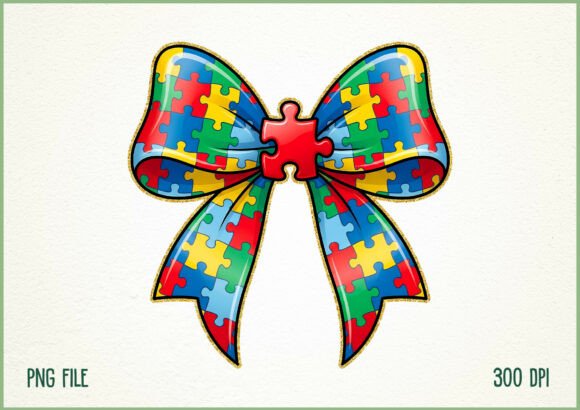
At first glance, you see the iconic puzzle pieces—a universal symbol for the complexity and beauty of the autism spectrum. But this design layers in something more personal: the bow. It’s a subtle, elegant touch that transforms the symbol from a simple icon into a badge of honor, a gesture of support, and a decorative element all at once. The combination feels both thoughtful and stylish. It’s not shouting; it’s speaking clearly. This blend of meaningful symbolism and clean, modern execution is what makes it a standout piece for any designer’s toolkit. You’re not just placing a generic awareness ribbon; you’re incorporating a thoughtfully crafted motif that adds depth to your work.
Putting the Design to Work: Practical Applications
So, you’ve downloaded the file. Now what? The real value of a premium design asset like this is in its sheer utility. Because it’s delivered as a high-resolution PNG with a transparent background, it slots into your workflow without any hassle. Think beyond the obvious. Yes, it’s perfect for a charity event t-shirt or a community walk banner. But consider these applications for your projects or your clients:
- Brand Identity & Logo Design: For organizations, support groups, therapists, or educators, this element can become a core part of a logo or a secondary brand mark. It instantly communicates mission and values.
- Packaging & Product Design: If you sell sensory toys, educational materials, or supportive products, incorporating this design on your packaging, tags, or even the product itself (like on a mug or tote bag) builds immediate trust and recognition.
- Digital & Social Media Graphics: Use it to create impactful social media posts, profile banners, website headers, or email newsletter graphics. It’s a visual shorthand for your support that stops the scroll.
- Print-on-Demand Merchandise: The list is extensive—stickers, greeting cards, posters, framed prints, scrapbooking elements, and home decor items. The 300 DPI, print-ready quality ensures it looks sharp on anything you produce.
- Editorial & Marketing Assets: For bloggers, content creators, and marketers, it’s a powerful asset for creating cohesive campaign materials, infographics, or presentation slides that need a thematic anchor.
Building Cohesion and Recognition in Your Projects
One of the biggest struggles in design, whether for a personal brand or a client, is maintaining visual consistency. A strong, reusable asset like the Autism Awareness Puzzle Bow Design acts as an anchor for your entire project. When you use it across your website, social media, and printed materials, you create a visual thread that ties everything together. This isn’t just about looking polished—it’s about building brand recognition. Your audience will start to associate that symbol with your message, your values, and your work. It moves from being a decorative element to becoming a key part of your brand’s visual language, enhancing professional presentation and deepening audience engagement through consistent, meaningful imagery.
Pairing and Placement: Making It Your Own
A great design element works with your other choices, not against them. When integrating the puzzle bow, think about context. Pair it with clean, sans-serif fonts for a modern, accessible feel that keeps the focus on the message. Alternatively, a soft script font can complement the bow’s elegance for more heartfelt applications like invitations or thank-you cards. The key is balance. Let the symbol be the focal point and choose supporting typography that doesn’t compete. Test it on different colored backgrounds—while the file has a transparent background, consider how the puzzle colors will interact with your palette. Sometimes, placing it over a subtle texture or a solid block of color can make it pop even more. Always prioritize the readability of any accompanying text, ensuring your entire design communicates clearly.
A Final Thought on Assets with Purpose
In a world saturated with generic clip art and overused icons, finding a design that carries genuine weight is rare. The Autism Awareness Puzzle Bow Design isn’t just another graphic; it’s a versatile tool for creators who want to contribute to a conversation with intention and style. It empowers you to produce work that is not only visually compelling but also resonant and respectful. Whether you’re a small business owner aligning your brand with a cause, a designer crafting materials for a nonprofit, or a hobbyist creating meaningful gifts, this asset provides a foundation for work that truly matters. It’s a reminder that the best design doesn’t just decorate—it communicates.